Singapore Trade Review Policy, Markets, Supply Chains
Policy-led growth / AI-led trade

Singapore's Trade Cycle Turns Hot Again

A higher GDP band, a sharper manufacturing outlook, and a trade network powered by AI hardware are reshaping the city-state's economic mood. From the port to the financial district, the rhythm feels faster, denser, and more global.

GDP 4.5% to 5.5%
NODX 14% to 16%
Exports SGD 90.3B
Surplus SGD 12.6B
8.4% Manufacturing growth now sits near the top of the cycle, led by semiconductor and AI-linked hardware demand.
18Y Foreign exchange and commodities activity at SGX is running at an 18-year volume high.
SGD 170.3B Taiwan-Singapore goods trade has surged into a new scale, powered by AI and chip flows.
2028 SAF taxation for cargo was pushed out, easing pressure on logistics and air freight.
Singapore skyline at dusk
Cover Story
Trade policy
Capital flows

Policy confidence is back in the price.

Market leadership is no longer just about resilience. It is about who can move fastest through a world of tariffs, AI capex, and thinner supply buffers.

MTI revises upward The growth range moves sharply higher after an unexpected first-half outperformance.
AI hardware demand ICs and disk media are the current center of gravity across trade desks.
Risk is still live Tariffs, compliance scrutiny, and geopolitics remain on the board every morning.
GDP guidance lifted to 4.5% to 5.5% Non-oil domestic exports forecast at 14% to 16% IC exports jump 91.9% Disk media up 182.5% Singapore trade surplus widens SGX volume at 18-year highs AI capex powers the hardware cycle 301 tariff pressure stays in focus Singapore Trade Review GDP guidance lifted to 4.5% to 5.5% Non-oil domestic exports forecast at 14% to 16% IC exports jump 91.9% Disk media up 182.5% Singapore trade surplus widens SGX volume at 18-year highs AI capex powers the hardware cycle 301 tariff pressure stays in focus Singapore Trade Review
This week

Three stories driving the trade mood

Policy heat, hardware demand, and route risk define the current read.

Singapore financial district towers
Macro Outlook

GDP is being re-priced, and the market is following.

What started as a cautious forecast has shifted into a stronger confidence band. The message from policymakers is simple: the first half came in better than expected, and the trade base is carrying more weight.

4.5% floor
5.5% ceiling

Semiconductor chip close up
AI Supply Chain

Singapore sits on the hardware edge of the AI cycle.

Chip demand, advanced packaging, and data-center components are pushing trade volumes higher. The local story is not just about one sector; it is about the density of the whole ecosystem.

91.9% IC exports
182.5% disk media
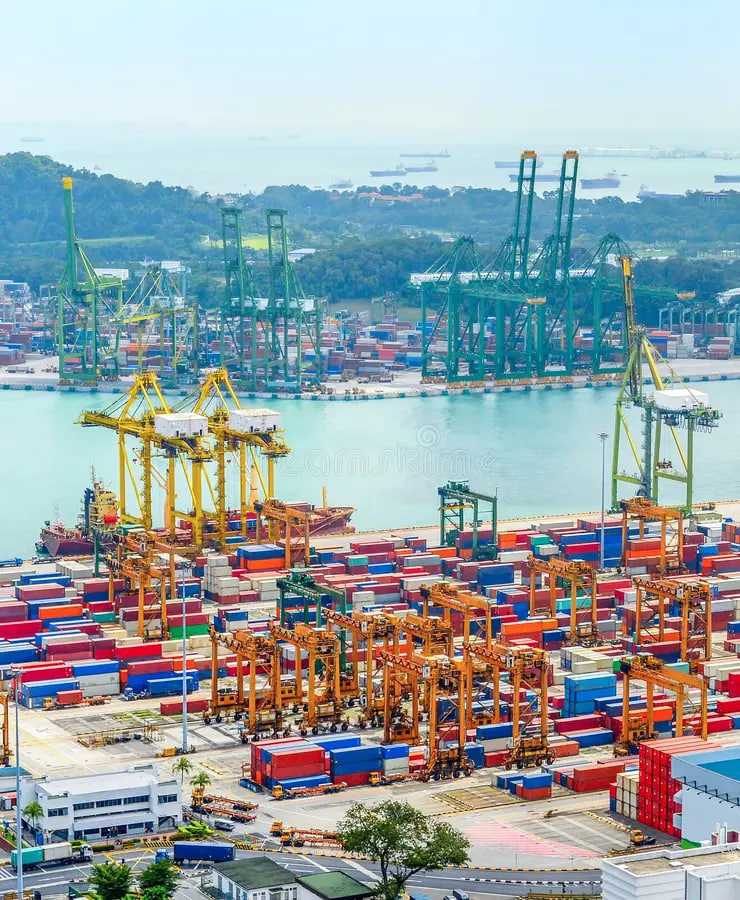
Container port at sea
Trade Risk

Tariffs, scrutiny, and compliance remain part of the backdrop.

Some export lines are absorbing extra pressure from U.S. measures, while scrutiny around transaction quality and supply-chain authenticity has risen across the commodity desk.

301 pressure
12.5% risk band
Market pulse

The numbers that keep showing up

Exports, margins, and route concentration in one view.

SGD 90.3B

Monthly exports hit a level that makes the trade desk feel more like a speedometer than a report.

Record scale in the latest monthly print
40.6%

Year-on-year export growth signals how concentrated the current upswing has become.

Fastest pace in the current cycle
SGD 170.3B

Taiwan emerged as a dominant trade partner as AI-linked hardware flow became the core route.

Chip-centric bilateral surge
SGD 12.6B

A wide monthly surplus keeps reinforcing the idea that this is still a logistics-and-finance machine.

Positive external balance
Policy radar

What the institutions are signaling

Manufacturing, tariffs, and guidance all pulled in the same direction.

The growth story is broadening beyond one headline number.

Manufacturing expectations have been reset higher, and that matters because the industrial cycle in Singapore is tightly linked to electronics, precision supply chains, and high-value routing. The current tone is not speculative. It is grounded in first-half momentum.

GDP band
Up
NODX
Up
Manufacturing
Hot
Risk premium
Live
Context
AI capex is the engine, but policy is the gearbox.

That combination explains why trade flows, listed supplier earnings, and logistics sentiment all seem to move together right now.

8.4% manufacturing growth view
3.1% 2027 growth expectation
2028 SAF timing shift
AI & chips

The hardware chain is still the cleanest trade story

Semiconductors, packaging lines, and high-performance compute keep the cycle tight.

Industrial facility and machinery
Supply chain
Advanced packaging

Orders are landing where the cycle is strongest.

Local suppliers tied to tools, equipment, and high-end assembly are seeing the benefit of global AI spending.

Taiwan and Singapore are now moving in lockstep.

Cross-border trade is heavily concentrated in AI hardware, chips, and components. That makes the route strategically important, not just numerically large.

85% Taiwan exports to SG
80% SG exports to Taiwan

Public markets are turning the trade story into earnings.

Supply-chain names tied to precision manufacturing, testing, and tooling are benefiting as customers keep adding capacity requests.

UMS Integration
AEM Holdings
Frencken Group

One cycle, many layers.

AI demand touches semiconductors, data centers, disk media, precision shipping, and financing. That is why the story feels bigger than one sector headline.

Commodity & risk desk

Pressure points that deserve a second look

Commodity checks, tariff watch, and compliance pressure sit beside the upside.

Port cranes and shipping containers
Commodity lane

Transactions are under a brighter spotlight.

Questions around bill authenticity and trade documentation have changed the tone around commodity financing, especially where leverage and trust overlap.

Freight yard and containers
Tariff watch

Trade lines facing U.S. pressure are not all exposed equally.

Energy, selected electronics, and some aerospace items remain outside the newest extra-duty discussion, which softens the immediate hit.

Business district and office lights
Compliance lens

Labor standards and enforcement posture remain central.

Singapore has kept the conversation focused on its own enforcement framework and the integrity of its trade system.

Routes & partners

Where the flows are concentrating

Partner mix, routing, and cargo timing now matter as much as the headline growth figure.

Re-routing winners

Singapore is becoming the safest detour in global trade

When routes get messy, capital and cargo tend to move toward the cleanest hub. That hub is Singapore again.

Port container terminal at dusk
Trade hub
Re-routing
Geopolitics

The new advantage is not just speed. It is optionality.

Multinationals are building multi-hub supply chains, and Singapore is increasingly the place where they park inventory, financing, and final routing decisions.

United States lane

Tariff shelter and route compression

With relative duties still manageable versus other Asian alternatives, firms are rerouting through Singapore to protect margin and keep U.S. access stable.

SGD 10B+ monthly export pace
Top buyer status
Greater China lane

High-value semiconductor traffic stays alive

Even as parts of the region soften, Singapore remains a high-trust channel for advanced chips and component transit into Hong Kong and the mainland.

95.7B Hong Kong export month
HS 8542 focus
ASEAN lane

RCEP turned the region into a faster distribution map

Food, medical gear, chilled cargo, and industrial inputs move through Singapore because the island can sort, finance, and dispatch them with fewer frictions.

12% cost down
40% faster logistics
Multi-hub manufacturing Factories are no longer placed in one country and left there. Routing, assembly, and delivery are split across places that can absorb policy shocks best.
Re-export becomes strategy Not all trade is final demand. Much of the current surge is driven by inventory staging, value-add sorting, and precision redistribution.
Singapore as trust layer The city-state wins because it offers predictability, legal clarity, and fast handoff between shipping, finance, and compliance desks.
Capex and rules

The money is pouring in, and the rulebook is getting friendlier

Plant builds, advanced packaging, and digital trade deals are turning policy into operating leverage.

Advanced manufacturing facility interior
Investment wave
Micron
HBM

Capital expenditure is now a visible export driver.

When a chip giant expands in Singapore, the effects travel through contractors, utilities, logistics, suppliers, and the export numbers themselves.

Micron's new fab changes the local gravity.

The 24 billion dollar investment in Woodlands adds advanced capacity, high-value jobs, and a deeper base for future chip flows.

US$24BLong-cycle fab commitment
1,600High-skill engineering jobs

HBM and advanced packaging keep the funnel hot.

The 70 billion dollar HBM facility pushes Singapore deeper into the AI memory stack, where margins and strategic value are both higher.

AI memory core
2026 ramp

Digital trade deals are the quiet force multiplier.

Digital economic agreements with Europe and the wider DEPA network keep paperwork lighter, data flows cleaner, and cross-border service trade faster.

Zero friction goal
Secured data flows
Feb

Digital trade agreements start to unlock smoother electronic invoicing, customs clearance, and cross-border digital services.

Mar

EFTA-linked rules bring more certainty for fintech, AI governance, and service exports that depend on legal predictability.

H2

New production lines and packaging capacity feed into export growth, while listed suppliers pick up the next leg of orders.

2027 lens

The next year still looks structurally supported

The next leg is being priced beyond one quarter.

Trade strength is becoming the new normal for the cycle.

Forecasts for 2027 have also moved higher, which matters because it suggests the current run is not just a rebound. It is being treated as a structural phase built on AI hardware demand, competitive supply-chain positioning, and a finance system designed to absorb volatility.

3.1% 2027 view
4.5% to 5.5% GDP band
14% to 16% NODX band
Cargo ship and harbor lights
Closing frame
Singapore by night

The port, the policy room, and the market are moving together.

That is the real story worth staying for.